Timber Construction: Myths vs. Reality
Wood has been used my humanity for millenia, yet its use in modern construction is still surrounded by numerous questions and deep-rooted myths. While multi-story timber buildings are a common standard in neighboring Austria or Scandinavia, the Czech environment often faces concerns regarding their safety, durability, or acoustic comfort.
As part of its Future of Timber Buildings document, the Timber working group under the Czech Green Building Council (CZGBC) analyzes these prejudices and confronts them with the reality of modern technologies. How do contemporary timber buildings perform in fire resistance tests, can they withstand moisture and pests as effectively as concrete or brick, and why is the fear of “paper walls” in modern sandwich structures unfounded?
In this section, we focus on five key areas that most frequently hinder the wider use of wood in our construction industry, examining what current science and technical standards have to say about them.
Myth 1: Timber buildings are prone to fire and moisture
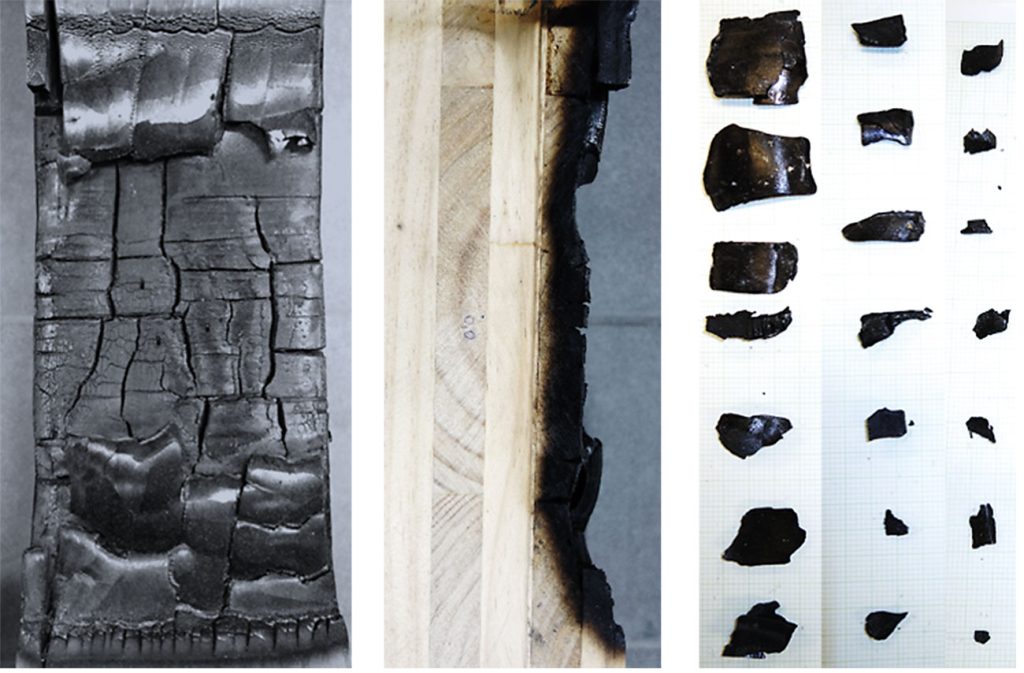
A common concern regarding timber buildings is their flammability and susceptibility to moisture. However, modern constructions meet the same stringent standards as traditional masonry buildings. High fire resistance is achieved primarily through sandwich structures, where the timber frame is protected by non-combustible materials (gypsum board, mineral insulation). Furthermore, with massive panels (CLT), a surface charring effect occurs, which insulates the inner structure; this allows the element to maintain its strength and predictable behavior even during a fire.
In parallel with fire safety, moisture protection is crucial. In modern construction, this is addressed through precise detail design and the use of advanced insulation. Technical discipline in critical areas, such as the foundation slab or roof penetrations, ensures that the wood’s moisture content remains stable at around 12%. This is safely below the 18% threshold required for the development of mold or fungi, thereby guaranteeing long-term durability and a healthy indoor environment.
Myth 2: Timber buildings are not as durable as brick, steel or concrete buildings
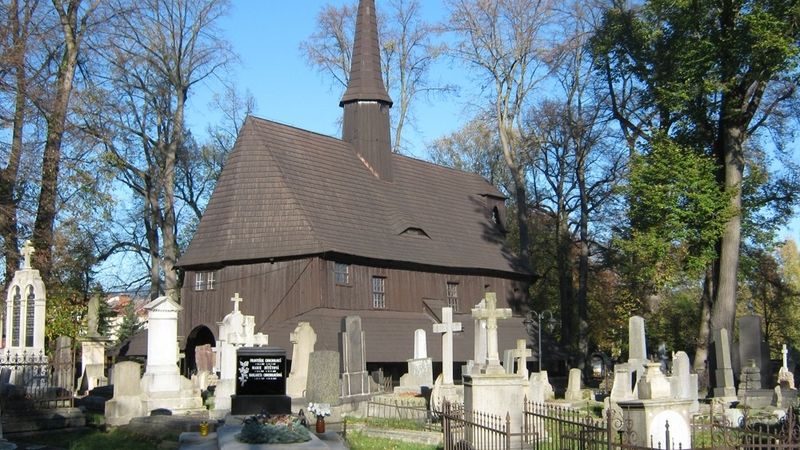
The widespread notion that timber buildings are less durable than those made of brick or concrete overlooks both historical experience and current technical progress. Properly designed and constructed timber structures have a lifespan exceeding 100 years, while historical buildings worldwide prove that wood can remain in perfect condition for several centuries.
The key factor for longevity is the consistent protection of load-bearing elements from moisture and biological pests through modern insulation layers and the precise execution of details in critical areas, such as foundations, wall joints, and roofing elements. Modern construction methods thus ensure that the wood remains dry and protected from external influences, making its durability and lifespan fully comparable to traditional materials.
Myth 3: Timber buildings are prone to pest infestation
Although wood is a natural material, modern technology makes it an unattractive environment for insects. The foundation of protection is the process of technical kiln-drying, which naturally eliminates any potential larvae and alters the physical properties of the wood so that it loses its nutritional value for wood-boring insects. During the critical construction phase, when the structure is most exposed, eco-friendly impregnations are also used as an additional protective shield. If a building is correctly designed to prevent the formation of trapped moisture pockets, the essential biological conditions for pest life disappear, ensuring the permanent safety of the structure without the need for further chemical intervention.
Myth 4: Timber buildings have poor sound insulation
The concern regarding inferior acoustics is a myth that overlooks the capabilities of modern multi-layer systems. Acoustic properties are not determined by the material of the load-bearing frame itself, but by the clever composition of walls and ceilings. By using mineral insulation in cavities, installing impact sound insulation in floors, and utilizing gypsum fiber boards, high levels of soundproofing can be achieved.
Furthermore, timber buildings using multi-layered sandwich structures provide acoustic comfort comparable to traditional construction. These systems effectively dampen both airborne noise and structural vibrations, ensuring that modern timber buildings provide quiet and comfortable living environments that fully meet contemporary standards.
Myth 5: Timber buildings are not suitable for large-scale or multi-story buildings
The myth that timber buildings are unsuitable for large-scale or multi-story structures stems from historical perceptions of wooden constructions as simple, small-scale objects. However, thanks to modern technologies and advancements in timber building systems, wood can now compete with traditional construction in large and multi-story projects in terms of strength, stability, and sustainability.
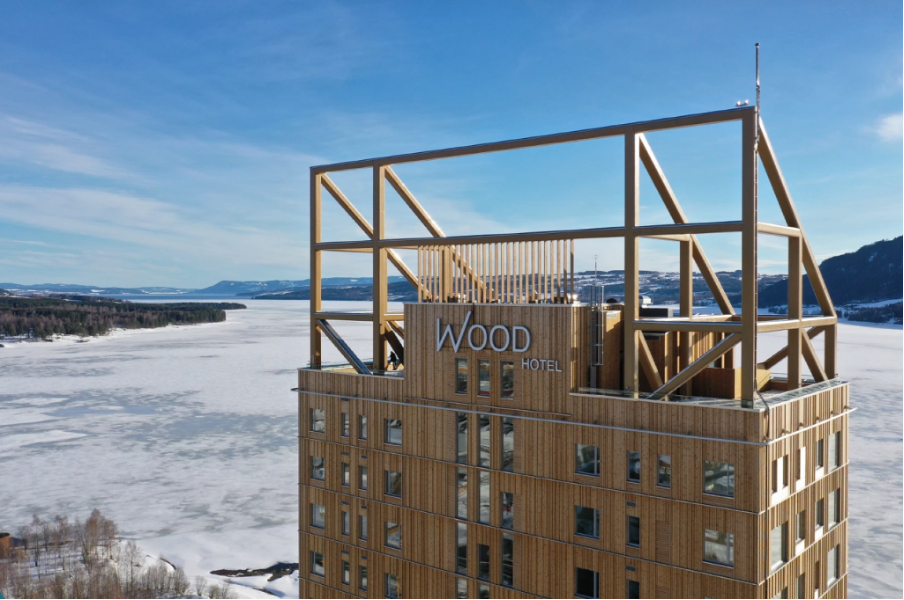
Innovative technologies such as Cross-Laminated Timber (CLT) have turned wood into a high-performance material for demanding urban projects. These massive systems exhibit extraordinary strength and stability, enabling the construction of multi-story administrative and residential complexes, which are already common in regions like Scandinavia. In addition to technical durability, large-scale timber buildings offer economic advantages. They are lighter, which reduces foundation costs, and they allow for rapid dry construction. With a minimal carbon footprint, they represent an efficient path toward sustainable 21st-century construction.
Examples of multi-story timber buildings
In recent years, many successful multi-story timber projects have been completed. These include administrative buildings, schools, and apartment buildings utilizing modern timber construction technologies. These projects demonstrate that timber buildings are a fully-fledged solution even for large and complex structures, whether they are family homes or commercial properties.
A future that makes sense
As data and modern engineering practices show, most concerns regarding timber buildings belong to the last century. Today’s CLT technologies, precision sandwich structures, and stringent fire safety standards place wood on the same level as concrete or steel, but with the added bonus of a lower carbon footprint and faster construction.
Debunking myths is the first step toward building smarter and more sustainably. A timber building is not a compromise in safety or comfort; it is a fully-fledged, modern solution for the 21st century.
However, the list of myths does not end here. A wide range of prejudices surrounding timber in construction still exists, from questions about intensive logging to the ecology of adhesives. Therefore, we will return to this topic in the future and gradually shed light on other areas that cause unnecessary doubt.